

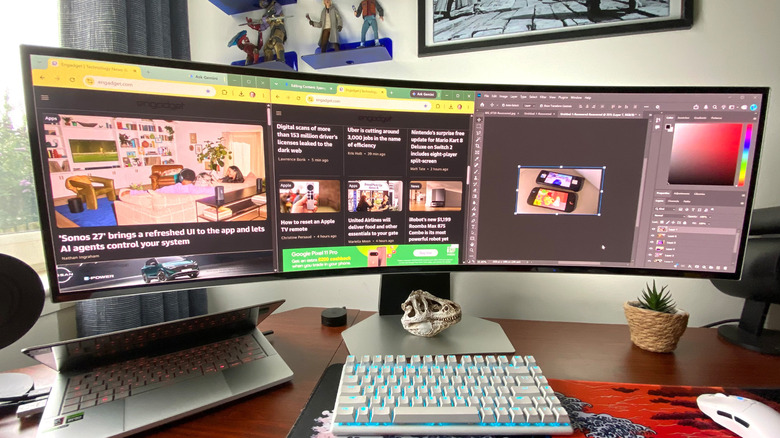
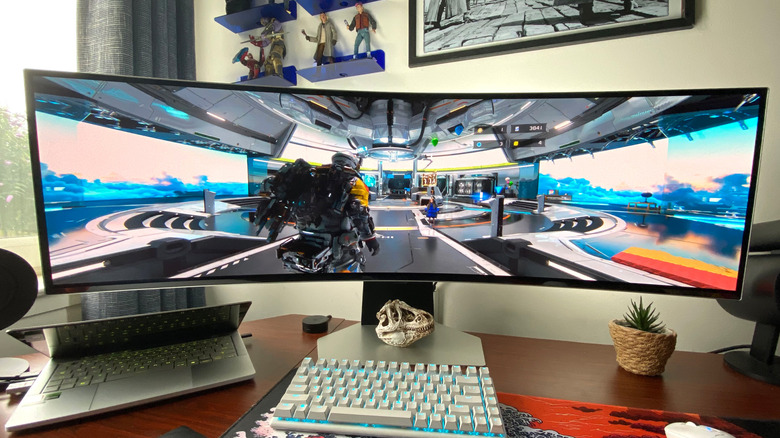
They're great for gaming, but not as good for other use cases. Curved monitors have come a long way since the first slanted screen in the form of the Samsung SE790C launched back in 2015. Heck, we now live in a world where Dell is launching 52-inch 6K ultrawide curved monitors. Not that you need to buy a giant screen to get the benefits of that curvature (though larger curved screens are definitely more immersive). If you're currently reading this on a flat panel but have always been intrigued about the curved alternative, we're here to break down the upsides and occasional disadvantages of owning this type of monitor. Are curved monitors worth the premium you often have to pay over their flat cousins? Do they really make playing PC games more immersive? And just why are so many ultrawide monitors curved? We'll touch on all that as we weigh the pros and cons of embracing the bend. As someone who has owned curved monitors for years, I'm obviously going to be a bit biased. For me, curved monitors are most definitely worth it, though I'd throw in a couple of caveats (which I'll touch on shortly). The biggest advantage of using a curved monitor? This type of display can provide addictively immersive gaming experiences. If you're a hardcore Steam player who spends dozens of hours a week playing the best PC games, a curved panel can be a great option. I regularly play my favorite PC titles on my 49-inch Samsung Odyssey G9 OLED. It's a spectacular screen for gaming. So many larger c



Henüz yorum yok — ilk yorumu sen yaz!